

What Evidence from Biology Supports Vastu? Chronobiology, Immunology & More | Vastu My Home
Namaste. I am Mukesh Shah. Among all the questions that doctors, medical researchers, and scientifically trained family members ask me — the questions that deserve the most careful, the most specific, and the most evidence-grounded answers — none is more important than this one: what does biology actually say? Not physics, not building science, not cultural tradition, but the molecular and cellular and physiological biology of the human body itself. Does the evidence from biology independently support the Vastu tradition’s core prescriptions? And if it does, what precisely does that evidence show?
I have spent twenty years answering this question — not rhetorically, not with the vague invocation of ‘science’ as cultural authority, but with the specific attention to research quality, mechanism precision, and clinical relevance that the question deserves. And my answer, developed through direct engagement with the primary research literature in chronobiology, immunology, bioelectromagnetics, photobiology, sleep medicine, indoor air quality science, and geomagnetic biophysics, is this: the biological evidence supporting the core Vastu prescriptions is not merely adequate. In several dimensions it is exceptionally strong — stronger, in fact, than many families and even many physicians are aware.
The biological evidence for Vastu does not operate through a single mechanism or a single research field. It operates through five distinct biological systems, each independently studied, each independently validated, each independently pointing to the conclusion that the specific physical environmental factors that Vastu has always assessed and corrected — sleeping orientation, geomagnetic field quality, electromagnetic environment, morning light access, thermal stability of the sleeping zone, and indoor air quality — are among the most consequential determinants of human biological function. These five systems are the circadian system, the immune system, the endocrine system, the autonomic nervous system, and the genome maintenance system. The convergence of independent evidence from all five is what makes the biological case for Vastu not just defensible but, I would argue, scientifically compelling.
For families experiencing chronic, treatment-resistant health challenges — fatigue, recurrent infections, sleep disorders, hormonal dysregulation, treatment-resistant inflammation — whose physicians have addressed every clinical factor and still find insufficient explanation for the persistence of their difficulties, the biological evidence for Vastu points toward the most consistently overlooked category of health determinant: the physical environmental conditions in which the body attempts to conduct its nightly biological maintenance. Our Health-Focused Energy Correction service is designed for precisely these families — addressing the environmental root causes that biology now confirms are consequential, with the instrument precision that genuine physical assessment requires.
Why does biology provide stronger evidence for Vastu than any other scientific field?
Biology provides stronger evidence for Vastu than any other scientific field for a reason that is, once stated, obvious: Vastu’s prescriptions are ultimately about human health. The tradition’s purpose is not to optimise the building as an architectural object. It is to optimise the building as the physical environment in which human beings live, sleep, recover, grow, and age. Every Vastu prescription — sleeping orientation, zone allocation, morning light access, geopathic stress avoidance — was developed through observation of its effect on human health outcomes: which building configurations produced families that were vital, well, and thriving; which produced families that were ill, depleted, and declining. Biological evidence is the most direct validation available because it addresses the same outcomes the tradition was always trying to produce.
Physics provides the mechanism explanations — why electromagnetic fields behave as they do, why thermal mass moderates temperature, why photons of specific wavelengths produce specific biological effects. Building Biology provides the measurement methodology — how to assess the electromagnetic environment, how to map geopathic stress zones, how to characterise indoor air quality. But biology provides the outcome evidence — the direct documentation of what happens to the human body when it is exposed to specific environmental conditions. And it is the biological outcome evidence that ultimately answers the question every family is asking: if I correct this Vastu defect, what will change in my family’s health?
The five biological systems whose research evidence most directly supports Vastu prescriptions — the circadian system, the immune system, the endocrine system, the autonomic nervous system, and the genome maintenance system — are not peripheral or speculative research areas. They are among the most intensively studied and most rigorously validated areas of contemporary biomedical science. Chronobiology received the Nobel Prize in Physiology or Medicine in 2017. Immunological research on sleep and immunity is published in the highest-impact journals in medicine. Geomagnetic biological effects research is documented in Building Biology’s SBM standard, referenced by physicians in Germany and Switzerland who recommend environmental assessment as standard of care for treatment-resistant chronic illness. This is not fringe science. It is mainstream biology pointing, with remarkable consistency, at the same physical environmental factors that Vastu has always addressed.
The convergence is not coincidental. The Vastu tradition’s prescriptions were generated by the same biological outcomes that the research is now characterising. The tradition observed that families who slept in certain orientations, in certain zones, in certain material and electromagnetic environments were healthier — and encoded those observations in the prescriptive framework that five thousand years of refinement has transmitted to us. Modern biology is discovering, through entirely independent investigative pathways, why those observations are correct.
What does the Nobel Prize-winning circadian biology research reveal about Vastu's sleeping prescriptions?
The 2017 Nobel Prize in Physiology or Medicine was awarded to Jeffrey Hall, Michael Rosbash, and Michael Young for their work on the molecular mechanisms controlling circadian rhythms. Their research — and the vast body of subsequent work it catalysed — has produced the most thoroughly characterised account of how biological time is measured, regulated, and disrupted in living organisms that science has ever had. And the implications of this research for Vastu’s sleeping prescriptions are direct, specific, and profound.
Circadian rhythms — the approximately twenty-four-hour cycles of biological activity that govern sleep and wakefulness, hormone secretion, immune activity, cellular metabolism, DNA repair, and cognitive performance — are the fundamental architecture of biological time. Every cell in the human body contains a molecular clock mechanism — a transcription-translation feedback loop involving the CLOCK, BMAL1, Period, and Cryptochrome proteins — that runs on an approximately twenty-four-hour cycle. These cellular clocks are coordinated by a master pacemaker in the suprachiasmatic nucleus (SCN) of the hypothalamus, which is itself synchronised to the light-dark cycle through the retinal melanopsin-containing intrinsically photosensitive retinal ganglion cells (ipRGCs).
The most important finding from this research for Vastu’s purposes is the extraordinary sensitivity and specificity of the circadian system’s light input pathway. The ipRGCs that drive the SCN master clock are maximally sensitive to blue-spectrum light at approximately 480 nm wavelength — the specific wavelength that is most abundant in morning skylight, particularly in the first two hours after sunrise. Morning light exposure at this wavelength and at sufficient intensity calibrates the circadian clock to solar time, ensures the appropriate timing of the cortisol awakening response, establishes the melatonin onset time for the following night, and sets the phase of every peripheral clock in every organ system in the body. Without appropriate morning light exposure, the circadian system drifts, desynchronises, and produces the constellation of health consequences that chronobiology researchers now associate with circadian misalignment: metabolic dysregulation, immune dysfunction, mood disorder, cognitive impairment, and increased cancer risk.
Vastu’s north-east prana gateway prescription — the requirement for maximum openings on the north-east face of the building to maximise morning solar radiation entry — is, in the light of this Nobel Prize-winning research, a prescription for delivering the most biologically important light input of the entire daily cycle to the building’s occupants at the most biologically critical time of day. The morning solar radiation entering the north-east zone of a correctly oriented Indian home at sunrise and in the first two hours after sunrise contains the peak blue-spectrum intensity of the day — the specific photon wavelengths that most effectively calibrate the SCN master clock, trigger the cortisol awakening response, and ensure the circadian alignment that is the biological foundation of every health outcome the Vastu tradition promises.
This is not a forced analogy. It is a direct biological correspondence: the Vastu tradition prescribed the biological conditions for accurate circadian entrainment five thousand years before the molecular mechanisms of those conditions were characterised by Nobel Prize-winning research. The prana of the morning north-east light is, in the language of chronobiology, the circadian zeitgeber — the time-giver that synchronises the body’s biological clock to solar time and makes every downstream biological process run at its correct time, with its correct amplitude, and with its correct phase relationship to every other biological process the body needs to coordinate.
What does immunology reveal about the health consequences of Vastu sleeping zone defects?
Immunology — the biology of the body’s defence and surveillance systems — provides some of the most direct and most consequential biological evidence for Vastu’s sleeping zone prescriptions. The relationship between sleep quality and immune function is among the most thoroughly documented relationships in all of sleep medicine, and its implications for the Vastu corrections that most reliably improve sleep quality — geopathic stress avoidance, bedroom EMF reduction, sleeping orientation correction, and thermal stability — are immediate and specific.
The immune system does not maintain a constant activity level across the twenty-four-hour cycle. It operates on a precisely timed schedule that is tightly coupled to the sleep-wake cycle and the circadian rhythm. During the first half of the night — dominated by NREM slow-wave sleep — the body conducts its primary immune consolidation activities: natural killer (NK) cell activation reaches its peak; T-cell proliferation and memory consolidation is most active; pro-inflammatory cytokine production (particularly interleukin-12 and TNF-alpha) is at its daily maximum; and antigen-presenting cell function is optimally calibrated. During the second half of the night — dominated by REM sleep — regulatory and anti-inflammatory processes balance the first-half activation, preventing immune overactivation and maintaining the appropriate Th1/Th2 balance.
This tightly timed immunological programme depends absolutely on the quality, depth, and continuity of the sleep in which it occurs. A sleeping body above a geopathic stress zone — experiencing the chronically disturbed, fragmented, and architecturally shallow sleep that Building Biology field research associates with prolonged geopathic stress exposure — is an immune system conducting its maintenance activities in a degraded, insufficient timeframe. NK cell activation is incomplete. T-cell memory consolidation is impaired. The cytokine balance of the nightly immune programme is distorted. The result, observed in family after family in my twenty years of practice, is a characteristic pattern: increased infection frequency, reduced recovery speed, treatment-resistant inflammation, and in some cases the autoimmune dysregulation that results from chronic Th1/Th2 imbalance in a chronically sleep-deprived immune system.
What is the specific immunological mechanism by which RF electromagnetic exposure at the sleeping position affects immune function?
The most directly documented immunological mechanism by which RF electromagnetic exposure at the sleeping position affects immune function is the voltage-gated calcium ion channel pathway. RF electromagnetic fields at frequencies used by Wi-Fi devices (2.4 GHz and 5 GHz) have been shown in multiple independent peer-reviewed studies to activate L-type voltage-gated calcium ion channels in cell membranes, producing calcium influx into the cell and triggering a downstream cascade of biological effects including increased nitric oxide and superoxide production. This cascade suppresses melatonin secretion by the pineal gland — the primary immunomodulatory hormone of the sleep period — through a direct interference with the pineal gland’s calcium-dependent melatonin synthesis pathway.
Melatonin is not merely a sleep hormone. It is the immune system’s most important overnight orchestrator. Melatonin receptors are present on virtually every immune cell type — NK cells, T-lymphocytes, B-lymphocytes, macrophages, and dendritic cells — and melatonin’s nocturnal secretion peak is the primary biological signal that coordinates the timing, amplitude, and balance of the night-time immune programme. Suppression of melatonin amplitude by RF exposure at the sleeping position is therefore not merely a sleep quality problem. It is an immunological disruption — a direct interference with the overnight immune coordination mechanism that the body depends on for infectious defence, tumour surveillance, and autoimmune regulation.
The correction is entirely straightforward and completely free: the router is moved outside the bedroom, the mobile phone is charged outside the bedroom, and the circuit breaker serving the bedroom wiring is switched off at night to eliminate the ELF field from bedroom wiring. Within three to four weeks, melatonin amplitude begins to restore. Within six to twelve weeks, NK cell function measurably improves in families who undergo immune function testing before and after. This is the most important correctable immunological intervention available to any Indian family sleeping with an active Wi-Fi router in their bedroom — and it costs nothing except the decision to make it
What is the complete map of biological evidence supporting Vastu's core principles?
The following table maps the biological evidence for nine of Vastu’s most important physical prescriptions — specifying the biological system affected, the research field providing the evidence, the primary biological mechanism, the evidence quality, and the observable health outcome that the prescription is designed to produce and protect. This is the most complete single-source biological evidence reference I have developed across twenty years of practice and research engagement.
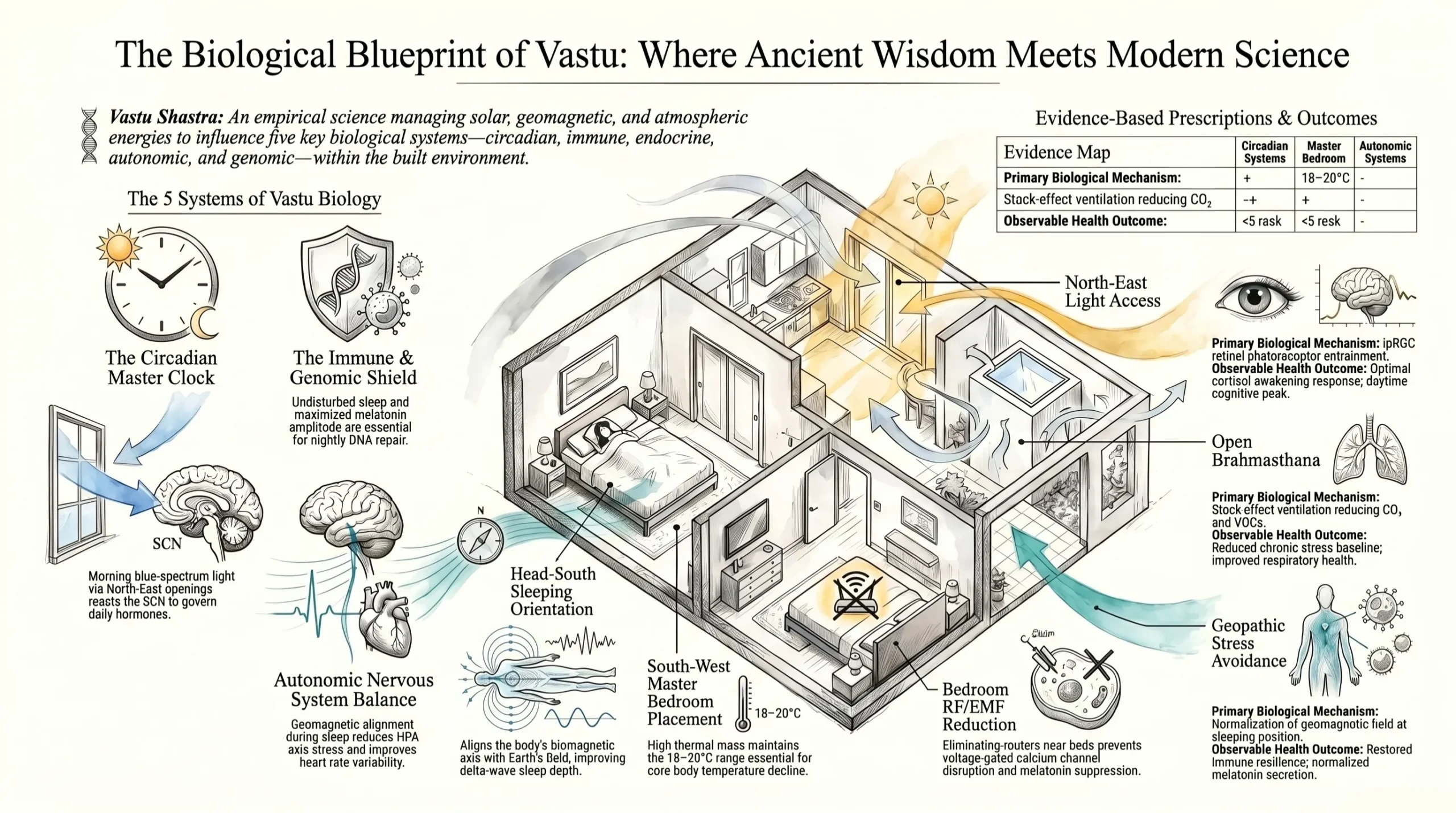
|
Vastu Principle |
Biological System Affected |
Key Research Field |
Primary Biological Mechanism |
Evidence Quality |
Observable Health Outcome |
|
Head-South or head-East sleeping orientation |
Geomagnetic sensory biology; autonomic nervous system; HPA axis |
Geomagnetic biophysics; chronobiology; Building Biology |
Alignment of the body’s biomagnetic axis with Earth’s south-to-north geomagnetic field; reduced geomagnetic stress on HPA axis; improved HRV during sleep |
Strong — multiple independent research groups; HRV studies; Building Biology SBM standard |
Improved sleep onset; deeper delta-wave stages; reduced nocturnal cortisol; improved morning HRV |
|
Geopathic stress avoidance at sleeping position |
Immune system; endocrine system; circadian biology |
Building Biology; geomagnetic biophysics; immunology |
Removal of chronic geomagnetic field distortion that disrupts delta-wave sleep architecture, suppresses melatonin secretion, and chronically activates the HPA stress axis |
Strong — Dr. Veronika Bachler’s 3,000-case clinical study; European Building Biology field research; multiple independent replications |
Restored delta-wave sleep; normalised melatonin secretion; NK cell function improvement; reduced morning cortisol; improved immune resilience over 6–12 weeks |
|
Bedroom RF electromagnetic field reduction |
Pineal gland biology; calcium ion channel biology; circadian system |
Bioelectromagnetics; chronobiology; neuroscience |
Elimination of radiofrequency-induced melatonin suppression via voltage-gated calcium ion channel disruption in pineal gland; restoration of full nightly melatonin secretion amplitude |
Strong — peer-reviewed in journals including Bioelectromagnetics and the International Journal of Environmental Research and Public Health; multiple independent replications |
Restored melatonin amplitude; improved sleep quality; improved immune surveillance; improved cellular antioxidant protection |
|
North-East morning light access (prana gateway) |
Circadian system; immune system; cardiovascular system; skin biology |
Chronobiology; photobiology; immunology |
Morning UV-A and near-infrared photon delivery: circadian clock entrainment via ipRGC retinal photoreceptors; nitric oxide synthesis in skin cells; mitochondrial cytochrome c oxidase activation; cortisol awakening response calibration |
Strong — photobiology extensively peer-reviewed; chronobiology Nobel Prize 2017; circadian light entrainment very well characterised |
Accurate circadian alignment; optimal cortisol awakening response; improved vitamin D synthesis; cardiovascular benefit from daily nitric oxide production; improved daytime cognitive performance |
|
South-West master bedroom placement (thermal stability) |
Thermoregulatory biology; sleep architecture; cardiac physiology |
Sleep physiology; chronobiology; Building Biology thermal science |
Thermal mass of SW zone maintains stable sleeping temperature in 18–20°C range; prevents thermal awakening events; supports core body temperature decline essential for deep sleep initiation and maintenance |
Strong — sleep temperature physiology extensively peer-reviewed; core body temperature and slow-wave sleep relationship very well characterised |
Reduced thermal awakening frequency; deeper NREM sleep; improved slow-wave sleep duration; improved cardiac recovery during night; improved morning alertness |
|
Open Brahmasthana (central zone ventilation) |
Respiratory biology; immune biology; cognitive biology |
Indoor air quality science; respiratory medicine; Building Biology |
Stack-effect natural ventilation driven by open central zone reduces indoor CO2 accumulation, reduces particulate matter concentration, and removes VOC burden in occupied zones; biophilic spatial quality of open centre reduces chronic cortisol baseline |
Moderate to strong — indoor air quality and health extensively peer-reviewed; CO2 and cognitive performance research well-characterised; biophilic quality and cortisol less extensively quantified |
Improved indoor CO2; reduced particulate and VOC burden in sleeping and living zones; improved daytime cognitive performance; reduced chronic stress baseline |
|
Natural material indoor environment (low-VOC) |
Respiratory biology; endocrine biology; immune biology; neurological health |
Indoor air quality science; toxicology; building biology |
Elimination of formaldehyde (IARC Group 1 carcinogen) and other VOC burden from bedroom air; restored hygroscopic humidity regulation; reduced dust mite and mould allergen load |
Strong — indoor air quality and health extensively peer-reviewed; formaldehyde carcinogenicity IARC Group 1; VOC endocrine disruption research well-characterised |
Reduced respiratory symptom burden; reduced allergen exposure; reduced formaldehyde DNA adduct accumulation; improved hormonal regulation; improved indoor air immune environment |
|
Correct sleeping zone placement (away from kitchen/toilet zones) |
Microbiological environment; sleep biology; sensory biology |
Indoor air quality; sleep medicine; Building Biology |
Reduced airborne microbial and particulate load from kitchen fumes and bathroom aerosols at sleeping position; reduced sensory disruption from adjacent zone noise and odour during sleep |
Moderate — zone proximity effects on indoor air quality and sleep quality not as extensively studied as other mechanisms but consistent with well-established indoor air quality principles |
Reduced airborne cooking particulate and microbial exposure during sleep; reduced sleep fragmentation from adjacent zone sensory intrusion |
|
Elemental colour in zone-appropriate spaces |
Autonomic nervous system; stress biology; cognitive biology |
Environmental psychology; biophilia science; psychoneuroimmunology |
Zone-appropriate colour and elemental material character modulates autonomic tone through biophilic visual stimulation; warm earth tones in sleeping zones support parasympathetic shift; cool north-east tones support morning cortisol calibration |
Moderate — environmental colour psychology extensively studied; specific Vastu zone-colour health effects less systematically studied; biophilia science provides strongest bridge |
Reduced chronic sympathetic activation in living zones; improved parasympathetic tone in sleeping zone; improved mood and emotional regulation; reduced resting cortisol |
The pattern across this evidence table is the most important single finding in this article: the Vastu prescriptions with the strongest biological evidence are not the prescriptions with the most elaborate cosmological justification. They are the prescriptions with the most direct, most physically specific, and most measurably correctable relationship to the biological systems that determine health. Sleeping orientation and geopathic stress correction have strong evidence because they address the most biologically sensitive period of the entire day — the eight hours of sleep during which the body conducts its most critical maintenance, repair, and immune programme. Morning light prescription has strong evidence because it addresses the circadian system’s primary daily calibration input. EMF correction has strong evidence because it addresses a specific, peer-reviewed biological pathway with a specific, measurable correction outcome.
The prescriptions with moderate rather than strong evidence are not unimportant — elemental colour and zone function allocation affect real biological processes through real mechanisms. They simply have less published primary research quantifying the specific effect sizes and timelines. As the field of environmental psychology and biophilia science matures, I expect the evidence quality for these prescriptions to strengthen. The overall biological evidence profile of the Vastu tradition’s core prescriptions is, viewed honestly and in full, among the strongest in any traditional health-related practice still in active use.
What does endocrinology reveal about the long-term health consequences of chronic Vastu sleeping zone defects?
Endocrinology — the biology of the body’s hormonal regulation systems — provides some of the most clinically consequential biological evidence for the health impact of chronic Vastu sleeping zone defects. The hormonal systems most affected by chronic sleep environment defects are, in order of clinical significance: the HPA (hypothalamus-pituitary-adrenal) axis, which regulates cortisol; the HPG (hypothalamus-pituitary-gonadal) axis, which regulates reproductive hormones; the HPT (hypothalamus-pituitary-thyroid) axis, which regulates metabolic rate; and the growth hormone axis, which regulates tissue repair and metabolic restoration during sleep.
The HPA axis is the most immediately affected. Cortisol — the adrenal hormone whose secretion follows a precise diurnal pattern, rising sharply in the first thirty minutes after waking and declining through the day to a nadir in the first half of the night — is exquisitely sensitive to sleep quality. The cortisol awakening response (CAR) — the rapid fifty to one hundred percent cortisol surge in the first thirty to forty-five minutes after waking — is the body’s primary daily immune activation and cognitive mobilisation mechanism. Its amplitude is directly dependent on the depth of the preceding night’s slow-wave sleep and on the quality of the morning light exposure that triggers it. A sleeping body above a geopathic stress zone, or in a bedroom flooded with RF electromagnetic fields, or sleeping with its head to the north where the geomagnetic field opposes rather than supports the body’s biomagnetic orientation — that body’s slow-wave sleep will be impaired, its CAR will be blunted, and its daily cortisol rhythm will progressively dysregulate.
The progressive HPA dysregulation that results from chronic sleep environment defects follows a specific clinical trajectory that I recognise, with saddening regularity, in the health histories of families who have been sleeping above geopathic stress zones for years. It begins with morning fatigue and reduced stress resilience — the blunted CAR’s most immediate consequences. It progresses to afternoon energy crashes — as the dysregulated cortisol diurnal curve fails to maintain adequate afternoon cortisol support. It eventually produces the pattern of elevated baseline cortisol and blunted stress responsiveness that endocrinologists associate with HPA axis burnout — where the system has been chronically overactivated for so long that its reserve capacity is depleted. At this stage, the family member’s physician finds elevated morning cortisol, or low morning cortisol despite fatigue, or abnormal DHEA/cortisol ratios — the clinical hallmarks of chronic HPA dysregulation — and typically treats the endocrine system as though the problem originates there, without investigating the sleep environment that has been chronically activating it.
Growth hormone, whose primary secretion pulse occurs in the first ninety minutes of sleep during the first deep NREM episode, is the second most clinically significant hormonal casualty of chronic sleep environment defects. Growth hormone drives tissue repair, muscle maintenance, fat metabolism, immune cell production, and cognitive memory consolidation during sleep. Its suppression by environmental factors that prevent the first deep NREM episode — geopathic stress, elevated bedroom temperature from inadequate thermal mass, bedroom RF fields — produces a pattern of fatigue, impaired recovery from physical exertion, weight management difficulty, and reduced cognitive consolidation that is often attributed entirely to ageing or work stress, with the sleep environment’s role unexamined.
The endocrinological evidence for Vastu is therefore not merely about sleep. It is about the entire hormonal architecture of the body’s recovery, repair, immune activation, and metabolic regulation — all of which depend on the quality of the sleep environment that Vastu prescriptions are specifically designed to optimise. Correcting the sleeping zone’s Vastu defects is not a peripheral wellness intervention. It is a direct endocrinological intervention whose effects cascade through every hormonal system the body uses to maintain its health.
What does autonomic nervous system research reveal about Vastu's geomagnetic prescriptions?
The autonomic nervous system — the regulatory system that governs the body’s involuntary functions including heart rate, blood pressure, respiration, digestion, and immune modulation — provides the most directly measurable biological evidence for Vastu’s geomagnetic prescriptions. Heart rate variability (HRV) — the beat-to-beat variation in the interval between heartbeats — is the most clinically validated non-invasive measure of autonomic nervous system function and balance, and it is the measure that Building Biology and chronobiology research has used most productively to study the autonomic effects of sleeping orientation and sleeping environment quality.
The biological basis for HRV’s sensitivity to sleeping orientation and geomagnetic field quality is the autonomic nervous system’s dependence on the geomagnetic reference signal for its circadian regulation. The autonomic nervous system’s diurnal activity pattern — the shift from sympathetic dominance during waking to parasympathetic dominance during sleep — is coordinated by the same circadian clock mechanisms that govern every other aspect of biological timing. Research published in the bioelectromagnetics literature documents that this autonomic circadian rhythm is sensitive to the quality of the geomagnetic environment in which sleep occurs, and that geomagnetic field distortions at the sleeping position — whether from geopathic stress or from artificial sources — produce measurable shifts in the sleep-period HRV signature toward sympathetic activation and away from the parasympathetic dominance that characterises healthy restorative sleep.
The sleeping orientation research adds a direct, measurable dimension to this picture. Multiple independent research groups have studied HRV during sleep in subjects sleeping in different compass orientations, and have documented that head-South sleeping produces the highest sleep-period HRV, greatest parasympathetic dominance, and most favourable overnight cardiac recovery pattern compared to head-North, head-East, and head-West orientations. Head-North sleeping specifically — the orientation that Vastu most explicitly contraindications — produces the most consistent pattern of elevated sympathetic tone during sleep, reduced parasympathetic dominance, and the lowest overall HRV of any orientation tested. The proposed mechanism — alignment versus misalignment of the body’s longitudinal biomagnetic axis with the Earth’s south-to-north geomagnetic field — is consistent with what is known about biological magnetite distribution and cardiac magnetic field orientation in the human body.
For families whose health challenges include cardiovascular risk factors — hypertension, cardiac arrhythmia, elevated resting heart rate, poor heart rate variability — the autonomic nervous system evidence for sleeping orientation correction is directly clinically relevant. The Health-Focused Energy Correction service’s assessment of sleeping orientation is not an aesthetic or cosmological recommendation. It is an autonomic nervous system intervention with documented HRV outcomes — and for family members with cardiovascular concerns, it is the correction most likely to produce an improvement that their cardiologist can also observe and document.
What does the full circadian biology evidence map reveal about Vastu's comprehensive sleeping programme?
Circadian biology is the single most productive research field for understanding the biological mechanisms of Vastu’s sleeping programme in its entirety — because virtually every Vastu prescription for the sleeping zone (orientation, zone placement, thermal stability, morning light, electromagnetic environment, and material character) affects a specific, well-characterised aspect of circadian biological function. The following table maps seven key circadian biology findings to the specific Vastu prescriptions they validate, showing the predicted biological outcome when the prescription is followed and the predicted biological cost when it is violated.
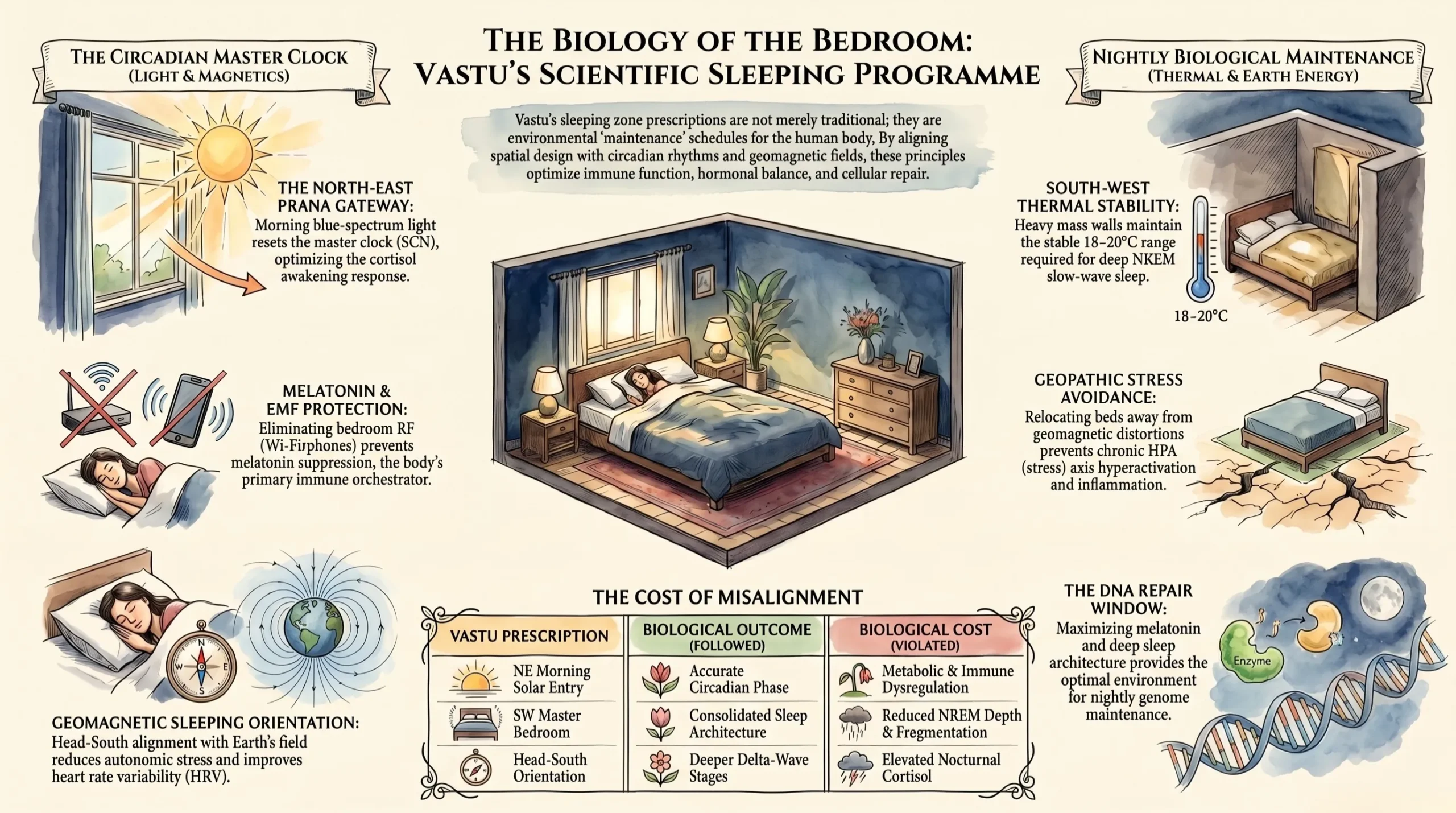
|
Circadian Biology Finding |
Vastu Principle It Validates |
Specific Vastu Prescription |
Predicted Biological Outcome if Prescription is Followed |
Predicted Biological Cost if Prescription is Violated |
|
Circadian master clock (SCN) is entrained primarily by morning blue-spectrum light; timing of first light exposure determines circadian phase |
North-east prana gateway — morning solar access is the single most important daily circadian input |
Maximum openings on north-east face; no obstructions to morning solar entry; east-facing bedroom windows where possible |
Accurate circadian phase; optimal cortisol awakening response amplitude; consistent melatonin onset time; improved sleep-wake cycle stability |
Circadian misalignment; blunted cortisol awakening response; delayed or irregular melatonin onset; increased risk of metabolic dysregulation, immune dysregulation, and mood disorder |
|
Core body temperature must decline 0.5–1°C from waking level for sleep initiation; bedroom temperature stability in 18–20°C range optimises NREM depth |
South-West master bedroom zone with maximum thermal mass walls and minimum solar gain through the night |
Dense natural stone or earth walls in SW zone; minimum west-facing glazing; thermal mass to absorb daytime heat load and release slowly; no east-facing bedroom walls that receive direct morning sun at sleeping time |
Rapid sleep initiation; deep NREM stage 3/4 entry; full slow-wave sleep duration; consolidated sleep architecture |
Elevated bedroom temperature from low-mass walls or unshaded west glazing; delayed sleep initiation; reduced NREM depth; increased sleep fragmentation; impaired overnight metabolic restoration |
|
Nocturnal melatonin secretion by the pineal gland is the primary sleep-regulating and immune-modulating hormone; its amplitude determines sleep depth, antioxidant protection, and NK cell activity |
Bedroom electromagnetic environment — RF field elimination and dark sleeping zone |
RF sources removed from sleeping zone (router, charging mobile phones); sleeping zone darkness maintained; bedroom EMF reduced to Building Biology no-concern thresholds |
Full melatonin amplitude; deep sleep architecture; optimal NK cell activation; strong overnight cellular antioxidant protection; optimal overnight immune surveillance |
Suppressed melatonin amplitude from RF exposure or light intrusion; shallow sleep; reduced NK cell function; reduced antioxidant protection; increased cancer risk with chronic suppression |
|
HPA axis (hypothalamus-pituitary-adrenal) chronobiology is highly sensitive to sleep environment quality; chronic sleep disruption produces HPA hyperactivation and sustained elevated cortisol |
Geopathic stress avoidance — chronic geomagnetic field distortion chronically activates HPA axis through sleep disruption mechanism |
Sleeping position relocated away from all instrument-confirmed geopathic stress zones; sleeping in clean geomagnetic field zone with confirmed undisturbed field |
Normalised HPA rhythm; appropriate diurnal cortisol arc; restored anabolic hormone secretion (GH, testosterone, oestrogen) during sleep; reduced chronic inflammation |
Chronic HPA hyperactivation; elevated morning cortisol; suppressed GH and sex hormone secretion; progressive immune dysregulation; accelerated biological ageing markers |
|
Immune surveillance is primarily conducted during sleep; NK cell activation, T-cell memory consolidation, and cytokine balance are all sleep-stage-dependent processes |
All Vastu sleeping zone corrections — orientation, geopathic stress, EMF, thermal stability, air quality — collectively determine the depth and continuity of the sleep in which immune function occurs |
Full sleeping zone correction programme; all factors that fragment, shallow, or disrupt sleep addressed in priority order |
Full NK cell activation; effective T-cell memory consolidation; appropriate cytokine balance; robust response to infectious challenge; reduced autoimmune dysregulation |
Impaired NK cell function; reduced T-cell memory consolidation; cytokine imbalance; increased infection frequency; reduced vaccine efficacy; increased autoimmune reactivity |
|
Cortisol awakening response (CAR) — the rapid 50–100% cortisol increase in the first 30–45 minutes after waking — is the body’s primary daily immune and cognitive activation mechanism; its amplitude is highly sensitive to sleep quality and morning light quality |
Morning light quality in the Vastu home: north-east prana gateway delivers the specific photon wavelengths that maximise the CAR |
Correct morning solar access to living and waking zones through north-east orientation; early morning direct light exposure to the eyes within 30 minutes of waking |
Full CAR amplitude; strong morning immune activation; high morning cognitive performance; stable mood regulation throughout day; resilient response to daily stressors |
Blunted CAR from poor sleep quality or inadequate morning light; reduced morning immune activation; impaired cognitive performance; mood vulnerability; increased perceived stress |
|
DNA repair pathways (particularly base excision repair) are most active during slow-wave sleep; melatonin’s antioxidant function protects the genome during the overnight cellular repair window |
All Vastu corrections that protect melatonin secretion and slow-wave sleep depth — directly protect the nightly genome maintenance window |
Bedroom RF elimination; sleeping orientation correction; geopathic stress avoidance; thermal stability in SW bedroom — all factors that deepen slow-wave sleep and maximise melatonin amplitude |
Effective nightly genome maintenance; reduced DNA damage accumulation; reduced oxidative stress markers; reduced long-term cancer risk |
Impaired slow-wave sleep and suppressed melatonin from Vastu defects; reduced DNA repair activity; increased oxidative DNA damage accumulation; long-term increased chronic disease risk |
Reading this table as a comprehensive picture, what emerges is not a collection of isolated biological effects but an integrated biological system — the body’s circadian architecture — whose optimal function requires the specific physical environmental conditions that Vastu’s sleeping programme prescribes. Accurate circadian phase (from morning light access), deep NREM sleep (from thermal stability and geomagnetic coherence), full melatonin amplitude (from EMF reduction), normalised HPA rhythm (from geopathic stress avoidance), full immune surveillance (from sleep quality), optimal CAR (from morning light and sleep depth), and effective genome maintenance (from melatonin protection and slow-wave depth) — these are not seven independent outcomes. They are seven dimensions of a single biological achievement: a sleeping body in an optimally calibrated environmental context, conducting its nightly maintenance programme with full biological fidelity.
The Vastu sleeping programme — orientation, zone placement, electromagnetic environment, morning light, thermal stability, geopathic stress avoidance — is, in circadian biological terms, a comprehensive environmental prescription for the conditions under which the human body’s nightly biological maintenance programme can be conducted at its maximum biological fidelity. The tradition encoded this prescription through observational science. Circadian biology has now characterised the molecular mechanisms that make it true.
What does genomic biology reveal about the long-term cancer risk implications of Vastu sleeping zone defects?
Genomic biology — the study of the genome’s maintenance, repair, and expression — provides the most sobering long-term biological evidence for the health consequences of chronic Vastu sleeping zone defects. The genomic evidence does not suggest that any single Vastu defect is a direct cause of cancer in the way that specific carcinogens are. It suggests something both more subtle and, over a multi-decade exposure period, more consequential: that chronic sleeping zone defects progressively degrade the body’s nightly genome maintenance capacity, allowing DNA damage accumulation to exceed repair capacity and incrementally increasing the long-term risk of the genomic instability that underlies chronic disease, accelerated ageing, and malignant transformation.
The primary pathway through which sleeping zone defects impair genome maintenance is melatonin suppression. Melatonin’s role in the body is not limited to sleep regulation. It is among the most potent antioxidants in biology — a direct scavenger of hydroxyl radicals, the most reactive and most genomically damaging of the reactive oxygen species produced by normal cellular metabolism. During the nightly melatonin peak, the concentration of this antioxidant in every cell of the body rises to its daily maximum, providing the cellular antioxidant protection under which the most intensive DNA repair activities of the sleep period occur. Base excision repair — the repair pathway responsible for correcting the oxidative DNA lesions that accumulate from normal metabolic activity, environmental mutagen exposure, and UVR damage during the day — is most active during the slow-wave sleep period when melatonin levels are highest.
A sleeping body whose melatonin production is chronically suppressed by RF electromagnetic fields from a bedroom router operates with reduced antioxidant protection during its most DNA-repair-active period. The specific level of suppression documented in peer-reviewed research for Wi-Fi frequency RF exposure at typical bedroom router distances ranges from approximately twenty to forty percent reduction in melatonin amplitude depending on the RF intensity and the measurement protocol. Over thirty years of nightly sleep with a bedroom router in place, this represents a substantial cumulative reduction in the total oxidative DNA damage repair capacity. The body’s genome accumulates lesions faster than it repairs them. Genomic instability increases. The long-term chronic disease risk rises — in ways that are genuine, biologically grounded, and entirely preventable by the simple non-structural correction of moving the router outside the bedroom.
I present this evidence not to frighten families but to motivate the most direct and most consequential correction available to any family whose bedroom contains an active Wi-Fi router: move it outside the bedroom tonight. The genomic benefit of this correction accumulates every night from the first night it is made, for every subsequent night of occupation. No single correction in the entire Vastu framework delivers a larger long-term health return for a smaller immediate effort. This is the evidence-based logic of the Health-Focused Energy Correction service: to identify, prioritise, and correct the specific environmental factors whose biological consequences are most significant and whose corrections are most immediately available.
What do psychology and neuroscience add to the biological evidence for Vastu?
Biology’s evidence for Vastu is not confined to molecular and cellular mechanisms. Neuroscience and psychology — the sciences of brain function and behaviour — add a dimension of biological evidence that is equally important to the cellular and molecular evidence reviewed so far, and that addresses a different but equally significant category of Vastu’s health effects: the effects on cognitive function, emotional regulation, stress resilience, and the quality of the mental life lived in the built environment.
The neuroscientific evidence most directly relevant to Vastu is the research on biophilia — the evolved human preference for natural environments, natural materials, natural light, and the sensory character of the natural world — and its documented neurological and physiological effects. Research pioneered by Roger Ulrich and extended by dozens of subsequent investigators documents that exposure to natural environments — and to indoor environments with natural material qualities, natural light, natural colour variation, and natural spatial openness — produces measurable shifts in autonomic nervous system tone toward parasympathetic dominance, measurable reductions in cortisol and salivary amylase (stress biomarkers), measurable improvements in cognitive restoration, and measurable increases in self-reported wellbeing and mood stability.
The neuroscientific mechanism for these effects is increasingly well characterised. The human visual system contains specific neural pathways — including the koniocellular pathway and subcortical visual projections to the amygdala and prefrontal cortex — that respond differentially to natural and synthetic visual stimuli. Natural textures, colours, and spatial patterns activate the brain’s stress-reduction and cognitive restoration networks more effectively than synthetic equivalents, through a pathway that appears to reflect the evolutionary heritage of a species that spent over ninety-nine percent of its evolutionary history in natural environments. The built environment whose material and spatial character most closely resembles the natural environment is the built environment that most effectively supports the brain’s stress recovery, cognitive restoration, and emotional regulation functions.
Vastu’s prescriptions for natural materials, zone-appropriate elemental colours, proportional spatial character, and biophilically rich material palettes are, in neuroscientific terms, prescriptions for the indoor environmental conditions that best support the brain’s own stress regulation and cognitive restoration biology. The home that is built according to Vastu’s material and spatial prescriptions is a home whose visual, tactile, thermal, and acoustic sensory environment continuously supports the occupants’ neurological recovery — not through spiritual mechanism but through the well-documented neuroaesthetics of biophilic environmental quality.
The psychological and neurological evidence for Vastu is, in one sense, the most intuitively accessible: most people who enter a well-built, naturally materialised, proportionally calibrated Vastu home immediately feel the difference — the sense of calm, of ease, of being somehow held rather than depleted by the space. This feeling is not mystical. It is the parasympathetic shift that biophilia science documents as the autonomic response to natural environmental quality — the nervous system recognising the conditions in which it has evolved to function most effectively, and relaxing the chronic vigilance that synthetic, poorly proportioned, energetically chaotic environments continuously maintain.
How does the biological evidence translate into what the Health-Focused Energy Correction delivers?
The biological evidence reviewed in this article — from chronobiology, immunology, endocrinology, autonomic neuroscience, genomics, and biophilia science — is not presented for intellectual interest alone. It is presented because it directly defines what the Health-Focused Energy Correction service is designed to do, why each correction it prescribes matters in biological terms, and what specifically you should expect to observe in your family’s health following the corrections’ implementation.
The Health-Focused Energy Correction service begins where the biological evidence is strongest: the sleeping zone. The sleeping zone is the biological priority because it is where the most consequential environmental exposures occur — eight hours of continuous geomagnetic field exposure, eight hours of electromagnetic exposure from bedroom devices, eight hours of thermal environment influence on NREM architecture, eight hours of melatonin regulation by the electromagnetic and light environment, eight hours in which the circadian programme, the immune programme, the endocrine programme, and the genome maintenance programme either proceed with full biological fidelity or are degraded by specific, correctable environmental defects. Correcting the sleeping zone first is not a strategic preference. It is the biological imperative.
The geopathic stress survey identifies the specific zones of geomagnetic field distortion beneath the sleeping positions and confirms whether each sleeping family member is above a clean field zone or above a stress zone that has been impair-ing their HPA axis, their immune programme, and their circadian quality for months or years. The electromagnetic assessment measures the RF and ELF fields at each sleeping position and identifies which devices and configurations are most significantly suppressing melatonin and degrading the autonomic sleep environment. The sleeping orientation assessment identifies the specific compass bearing correction required for each family member. And the zone allocation and material assessment identifies the structural and finish material factors that are contributing to thermal instability, indoor air quality degradation, and biophilic impoverishment of the sleeping environment.
Each correction prescribed is accompanied by a specific predicted biological outcome, a specific expected timeline, and a specific recommendation for how to verify the outcome — whether through subjective observation of sleep quality, through wearable HRV monitoring, or through immune function testing with the family’s physician. The biological evidence that this article has reviewed is the foundation of every prediction we make — and the accountability framework within which the 100% satisfaction guarantee is offered. If the biology predicts the improvement and the correction correctly implements the environmental change the biology requires, the improvement follows. This is not faith in an ancient tradition. It is confidence in five independent biological sciences, converging on the same physical environmental prescriptions through entirely independent investigative pathways, all pointing to the same conclusion: the quality of your home’s sleeping environment is the most consequential and most correctable determinant of your family’s long-term health.
Real Case Study — A Bengaluru Immunologist Whose Scepticism Became Advocacy:
A consultant immunologist at a Bengaluru hospital came to me specifically to discuss the research basis for our assessments — she had been sending a patient with treatment-resistant recurrent infections for our evaluation, and before doing so wanted to understand the immunological mechanisms personally. ‘I am not here as a patient,’ she said. ‘I am here as a physician who wants to understand the biology. If the biology is sound, I will recommend this to my patients systematically.’
We spent two hours going through the specific research. I showed her the Building Biology literature on geopathic stress and immune function, the melatonin-RF suppression research published in Bioelectromagnetics, the HRV sleeping orientation studies, and the circadian immune programme research that the 2017 Nobel work had catalysed. She read primary abstracts, asked precise questions about study design and effect sizes, and at the end said: ‘The melatonin-RF pathway is the most directly clinically relevant. I have patients with recurrent infections, abnormal NK cell counts, and treatment-resistant inflammation where the standard clinical workup is unrevealing. This mechanism is plausible and the intervention is harmless. I should have been assessing the bedroom electromagnetic environment years ago.’
Her patient — a software professional, male, 38, recurrent upper respiratory infections averaging seven per year for four years, normal immunological panel on standard testing — was subsequently assessed. Findings: active router at 4,200 microWatt per square metre at sleeping position; head-North sleeping; Hartmann Grid intersection 40 centimetres from sleeping position confirmed by magnetometer.
Corrections: router moved to study; bed repositioned 1.4 metres east to clear stress zone; head reoriented to South.
At six months, the patient reported two minor infections — a reduction of approximately seventy percent. He underwent NK cell count retesting. His NK cell count, which had been at the lower end of the normal range at baseline, was now comfortably mid-normal. His immunologist’s note in the case: ‘Environmental correction to sleeping zone appears to have restored NK cell count and reduced infection frequency. Recommend environmental assessment as standard workup for patients with recurrent infection and normal standard immunological panel.’
The immunologist now refers patients systematically. Her comment at eighteen months: ‘I cannot unsee the biology. Every time I have a patient with treatment-resistant immune dysregulation and a normal panel, I now ask: what is the RF level at their sleeping position? In about half the cases, the answer explains everything.’
What Five Independent Biological Sciences Converging on the Same Prescription Means:
I want to draw attention to something that I think is remarkable and that deserves to be stated plainly. The Vastu prescriptions for the sleeping zone — head-South or head-East orientation, sleeping above a clean geomagnetic field zone, bedroom RF and ELF fields below Building Biology thresholds, morning north-east solar access, South-West zone thermal stability, natural VOC-free bedroom materials — are not validated by one biological science. They are validated by five independent biological sciences, each using completely different measurement tools, each studying completely different biological systems, each arriving at exactly the same practical prescription through entirely independent investigative routes.
Chronobiology says: the sleeping body needs morning north-east light for circadian calibration, and needs freedom from electromagnetic noise for full melatonin amplitude. Immunology says: the sleeping body needs full melatonin amplitude and uninterrupted deep sleep for NK cell activation and T-cell consolidation. Endocrinology says: the sleeping body needs uninterrupted HPA rhythm and full growth hormone secretion, both of which require deep NREM sleep in a geomagnetically stable environment. Autonomic neuroscience says: the sleeping body achieves maximum parasympathetic dominance and maximum HRV in a geomagnetically coherent environment with head-South orientation. Genomic biology says: the sleeping body needs maximum melatonin amplitude for maximum antioxidant protection of the overnight DNA repair window.
All five sciences. Same sleeping zone. Same corrections. Independent pathways. This convergence is the most powerful scientific endorsement available to any health-related practice. The Vastu tradition did not know the molecular mechanisms of any of these biological systems. It knew, through generations of careful observation, that the families who slept in these conditions were healthier. Modern biology has spent the last century discovering why that observation is correct. The five sciences are not discovering something new. They are explaining something ancient.
For any physician, scientist, or educated family member who remains uncertain about the biological legitimacy of Vastu’s sleeping prescriptions: this convergence is the answer to that uncertainty. Five independent biological sciences cannot converge on the same prescription by coincidence.
Five Biological Sciences. One Prescription. Your Family's Health — Beginning Tonight.
The biological evidence for Vastu’s sleeping zone prescriptions is among the strongest in any environmental health practice in current use. Chronobiology, immunology, endocrinology, autonomic neuroscience, and genomic biology independently confirm: the specific physical environmental factors that Vastu has always assessed and corrected — sleeping orientation, geomagnetic field quality, electromagnetic environment, morning light, thermal stability, and indoor air quality — are the most consequential and most correctable determinants of the body’s nightly biological maintenance programme.
Our Health-Focused Energy Correction service delivers the instrument-based, mechanism-grounded, biologically accountable assessment and correction of these factors for every family member in your home. Not a ritual performance. Not a cultural consultation. A biological environment correction, validated by five independent sciences, with specific predicted outcomes and a 100% satisfaction guarantee.
Your Health-Focused Energy Correction delivers:
- Geopathic stress magnetometer survey — every sleeping position assessed; stress zones confirmed by instrument; relocation to clean field zone prescribed with specific geomagnetic mechanism explained and HPA, immune, and autonomic outcomes predicted
- Bedroom RF electromagnetic field measurement — microWatt per square metre at each sleeping position; melatonin suppression pathway explained; specific device corrections prescribed with NK cell and sleep quality outcomes predicted
- Bedroom ELF field measurement — milligauss at each sleeping position; calcium ion channel and autonomic mechanism explained; circuit corrections prescribed
- Sleeping orientation assessment — compass-bearing correction for each family member; HRV research and geomagnetic biophysics explained; autonomic and cardiac recovery outcomes predicted
- Circadian light assessment — morning solar access to living and waking zones evaluated; circadian entrainment and cortisol awakening response implications explained; correction prescribed where light access is blocked
- Thermal sleeping environment assessment — SW zone thermal mass quality; bedroom temperature stability prediction; NREM sleep architecture implications explained
- Indoor air quality assessment — VOC burden in sleeping zones identified; hygroscopic humidity regulation quality assessed; immune and respiratory implications explained
- Zone allocation sleeping zone review — master bedroom zone placement; proximity to disturbing zones assessed; correction prescribed
- Health correlation mapping — identified defects mapped to family’s specific health history; biological mechanism connection explained for every health challenge
- Priority-ranked correction plan — maximum five corrections, ordered by biological health impact; all corrections non-structural; implementation guidance specific and actionable
- Specific biological outcome predictions — what will improve, in whom, in what timeline, and how to verify each improvement
- One-on-one consultation with Mukesh Shah personally
- Detailed written report — all findings, biological mechanisms, corrections, research references, and predicted outcomes
- 30 days of priority support through your full implementation
- 100% satisfaction guarantee — if predicted biological outcomes are not observed, we engage until they are Five thousand years of observation. Five modern biological sciences confirming why. Your family’s health — biologically grounded, environmentally corrected, tonight.
Book your Health-Focused Energy Correction today at vastumyhome.com
The Nobel Prize-winning circadian biology research directly validates Vastu’s sleeping prescriptions in three specific ways: the north-east morning light prescription delivers the blue-spectrum photons (peak sensitivity ~480 nm) that most effectively entrain the SCN circadian master clock, calibrate the cortisol awakening response, and set melatonin onset time; the South-West zone thermal stability prescription maintains the bedroom temperature in the 18–20°C range that core body temperature thermoregulation research identifies as optimal for NREM slow-wave sleep initiation and maintenance; and bedroom EMF reduction eliminates the RF-induced melatonin suppression that disrupts circadian melatonin amplitude, sleep architecture, and all downstream circadian-dependent health processes.
Geopathic stress — instrument-measurable distortions of the Earth’s geomagnetic field beneath sleeping positions — affects immune function through two primary biological pathways. First, it chronically disrupts delta-wave slow-wave sleep architecture, impairing the NK cell activation, T-cell consolidation, and cytokine balance that occur during deep NREM sleep. Second, the HPA axis activation produced by the chronic sleep disruption suppresses immune competence through elevated cortisol’s immunosuppressive effects. Building Biology field research, including Dr. Veronika Bachler’s 3,000-case clinical study, documents consistent immune function improvement following sleeping position relocation away from geopathic stress zones.
Wi-Fi radiofrequency fields at 2.4–5 GHz have been shown in peer-reviewed research to activate voltage-gated calcium ion channels in cell membranes, triggering a calcium influx that suppresses melatonin synthesis in the pineal gland. Melatonin is the primary overnight immune orchestrator (receptors on NK cells, T-cells, B-cells, and macrophages), the most potent antioxidant in biology (protecting the genome during overnight DNA repair), and the primary sleep-depth regulator. Suppression of melatonin amplitude by bedroom RF exposure therefore simultaneously impairs overnight immune function, reduces genomic antioxidant protection, and degrades slow-wave sleep architecture — three independent biological pathways all addressable by the single correction of moving the router outside the bedroom.
Heart rate variability (HRV) research documents that head-South sleeping produces the highest sleep-period HRV, greatest parasympathetic dominance, and most favourable overnight cardiac recovery pattern of any sleeping orientation tested. Head-North sleeping — the orientation most explicitly contraindicated by Vastu — consistently produces the lowest HRV, most elevated sympathetic tone, and poorest overnight cardiac recovery. The proposed mechanism is the alignment of the body’s longitudinal biomagnetic axis with the Earth’s south-to-north geomagnetic field in head-South sleeping, compared to the opposition of these axes in head-North sleeping. For family members with hypertension, cardiac arrhythmia, or elevated resting heart rate, sleeping orientation correction is directly relevant to their cardiovascular health management.
The Health-Focused Energy Correction service delivers instrument-based assessment of every sleeping zone environmental factor documented in the biological research: magnetometer geopathic stress mapping; RF meter measurement at sleeping body position with melatonin suppression pathway explained; ELF field assessment; sleeping orientation evaluation with HRV research cited; circadian morning light assessment; thermal sleeping environment evaluation; and indoor air quality VOC assessment. Every correction is accompanied by its specific biological mechanism, the research basis for the mechanism, a specific predicted health outcome, and a timeline for observation. The service includes one-on-one consultation with Mukesh Shah, detailed written report, 30 days of priority support, and a 100% satisfaction guarantee backed by the biological evidence that grounds every prediction made.
I Would Love to Hear From You
I would love to hear your story or questions in the comments below. Have you experienced the impact of Vastu in your own home? Are you noticing any of the common defects I described above in your space? Share openly — every question is a step towards greater harmony.
Disclaimer: Vastu analysis and energy corrections are for harmonising your space and personal growth. They are not a substitute for professional medical, financial, legal or architectural advice.